
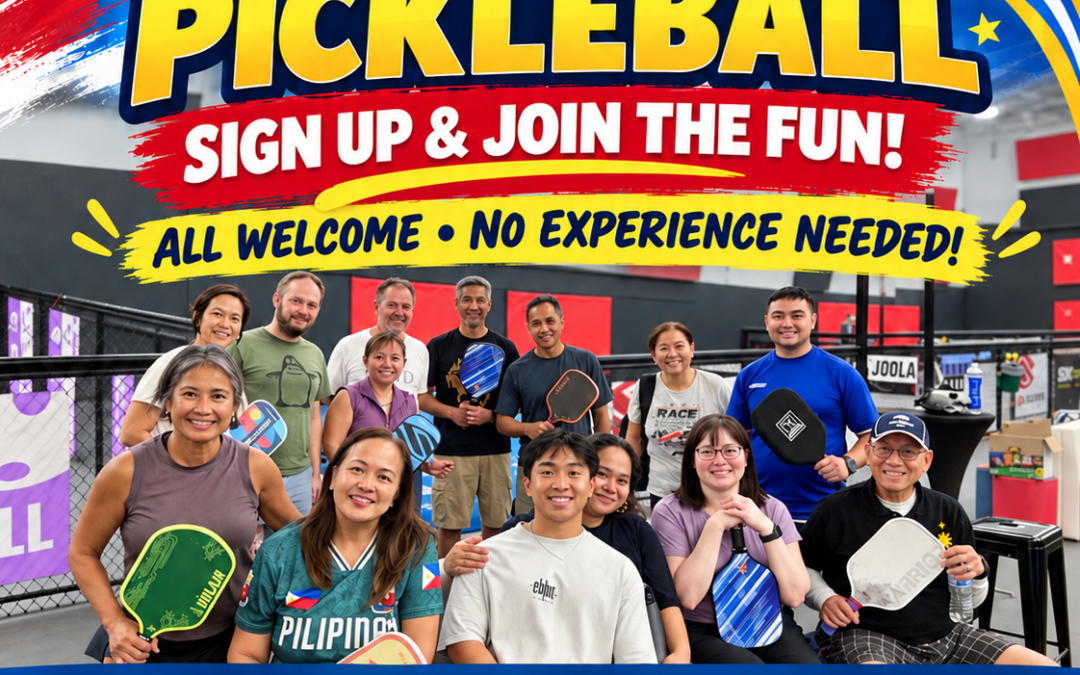
What if getting more exercise also meant spending more time with friends, sharing laughter, and meeting new people in our Filipino community? That’s why I’m encouraging everyone to give pickleball a try—and hopefully make it part of our weekly routine.
Pickleball is a paddle sport that combines elements of tennis, badminton, and table tennis. It’s played on a smaller court than tennis, often with two players on each side. You don’t need to be an experienced athlete to start. With a little guidance and practice, beginners can learn the basics and enjoy playing together.
Why do so many people enjoy it?
Much of pickleball’s appeal comes from the combination of movement and social connection. You’re getting exercise while enjoying friendly rallies, encouraging your partner, and laughing at the occasional missed shot. Playing doubles makes it a shared experience, and rotating partners gives everyone a chance to meet someone new.
For our community, it can be another meaningful way to stay connected—a regular gathering where we care for our health and strengthen our friendships.
“But I’ve never played!”
That’s perfectly okay! You don’t have to be good at pickleball to enjoy it. Everyone starts somewhere, and a welcoming group can make learning much less intimidating. We can begin with simple instruction, gentle practice, and games suited to our experience and comfort levels.
Other common concerns include being out of shape, keeping up with experienced players, or aggravating an old injury. These are good reasons to start slowly and communicate your needs. Doubles can reduce the amount of court each person covers, but pickleball still involves quick stops, turns, and sideways movements. It deserves the same preparation as any other sport.
Warm up, stretch, and respect your limits
Pickleball injuries can include ankle sprains, muscle strains, irritated knees, overuse pain in the arm, and injuries from falls. Preparation and sensible pacing can help reduce the risk, although no sport is completely injury-free. (hss.edu)
Before playing, take a few minutes to walk or march in place, then add gentle arm circles and controlled side steps. Include comfortable stretches without bouncing or forcing a painful position, and begin with easy practice shots. Wear supportive tennis or pickleball court shoes, wear protective eye wear, drink water, and take breaks. A beginner lesson can also help you learn safer movement and paddle technique. (orthoinfo.aaos.org)
Start with short sessions and build up gradually. Give your body recovery time between games, especially when you’re new. If you have an existing injury, significant joint pain, or a condition that affects safe exercise, ask your healthcare professional about suitable activity. Don’t push through pain or exhaustion just to finish a game. (hss.edu)
No point is worth an injury
A little friendly competition can be fun, but our priority should be enjoying ourselves and going home feeling well. Let a difficult ball go instead of diving, lunging beyond your balance, or chasing a shot you cannot safely reach. Tell your partner when you need a slower pace or a break.
Let’s celebrate good rallies, encourage beginners, and laugh at our mistakes. There’s no need to prove anything on the court!
Let’s make it a healthy community habit
My hope is that we can come together once a week for relaxed, welcoming pickleball sessions. A regular gathering gives us something to look forward to and another reason to keep moving.
Bring a friend, bring your curiosity, and come ready to learn. Whether you’ve played before or have never held a paddle, you’re welcome.
